


A Little History
eButikken™ delivered Norway’s first Sikringsradio system for the aquaculture industry as early as 2007. At the time, the systems were based on analogue radio technology, featuring manual emergency buttons and the “Lone Worker” safety function integrated into the radios.The industry quickly embraced our waterproof communication radio, the Icom F51, which not only improved worker safety, but also made everyday communication between employees far more efficient.
In 2010, eButikken™ launched its first water sensor mounted directly onto a Sikringsradio unit. Developed for the Vertex Standard VX-824, the solution was quickly adopted by many of our customers as part of their personal protective equipment.
As early as 2011, we delivered our first digital Sikringsradio systems. At the time, most suppliers of communication solutions had little or no experience with digital radio communication technology, and many believed that the industry had no interest in such products.
In 2014, eButikken™ once again made history together with Hytera by delivering the world’s first digital GSM Gateway capable of transmitting alarms, voice communication, SMS messages, and GPS coordinates directly to the emergency response centre. The combination of digital communication solutions, automatic water sensors, and direct transmission of alarms and GPS coordinates to the emergency services has significantly improved safety for many employees within the aquaculture industry.
In 2023, eButikken™ took another major step forward by beginning extensive testing and development work around Hytera’s Push-to-Talk over Cellular (PoC) platform, HyTalk.
Having already worked closely with Hytera solutions for many years, eButikken™ brought extensive experience and operational insight from the aquaculture industry into the project. Together, we began developing customised solutions designed specifically for the operational and safety requirements of modern aquaculture environments.
This close collaboration was further strengthened during an intensive development residency in Shenzhen in 2024, where eButikken™ worked directly alongside Hytera’s development teams to refine and expand the platform’s capabilities for the industry.
In 2025, eButikken™ received the Vertical Pioneer Award during the Hytera Global Partner Summit in recognition of our commitment to delivering innovative communication and safety solutions to the aquaculture sector.
Development never stands still, and neither do we. We will continue driving innovation to deliver safer, smarter, and more reliable communication solutions for the future of the industry.
Our water sensor technology has been developed with support from the Research Council of Norway through multiple SkatteFUNN research and innovation projects.
No two operations are alike. Digital solutions open up endless possibilities. Feel free to contact us for a non-binding discussion about how we can support your communication and safety requirements.
Get in Touch
What is Sikringsradio havbruk™ ?
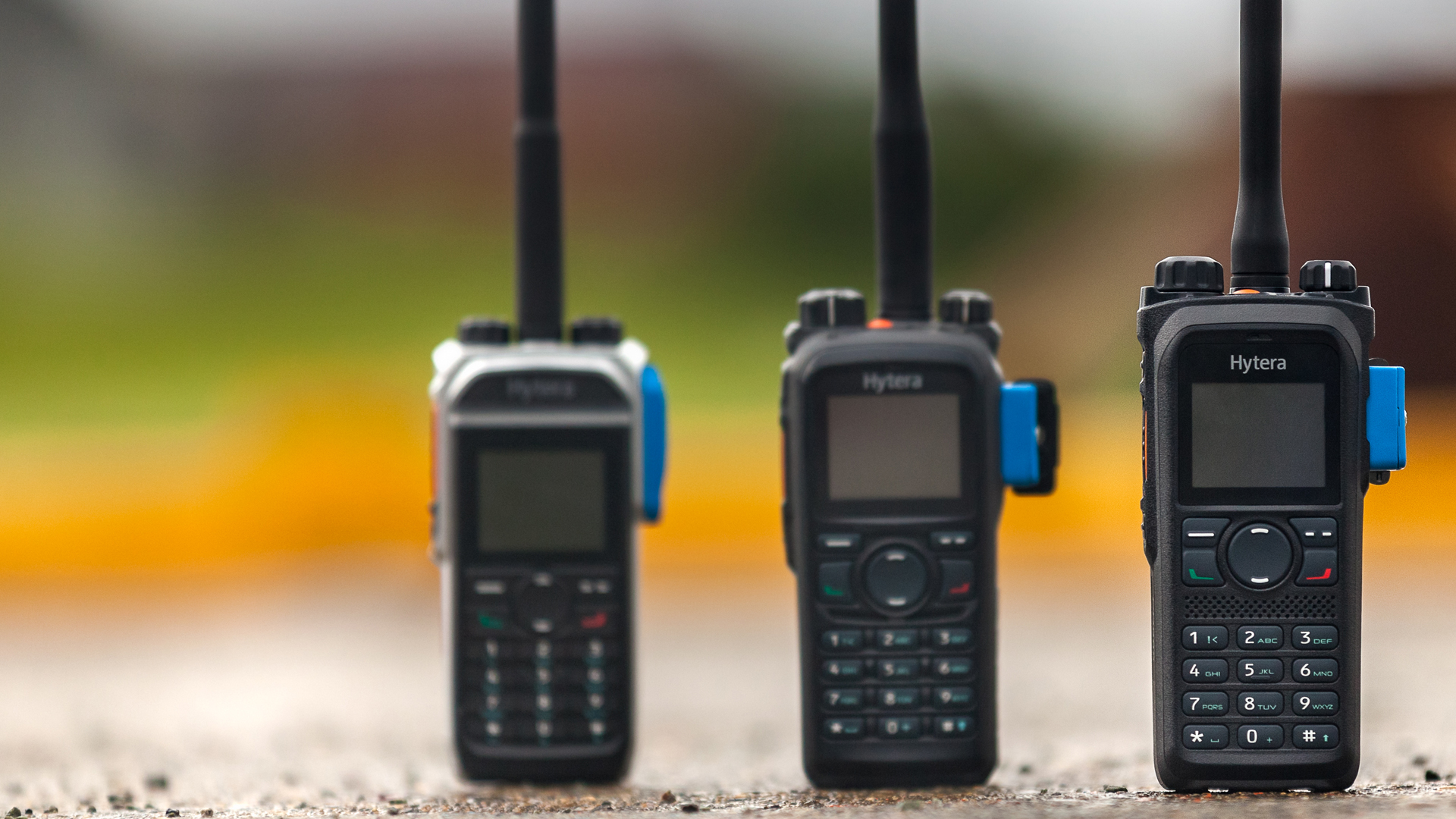
Sikringsradio Havbruk™ is a communication and safety system designed for the aquaculture industry. While users experience the system as a standard communication radio, it also includes integrated safety features such as lone worker acknowledgement, manual emergency alarms, and automatic alarm activation through a water sensor in the event of an accident.
How Are Alarms Triggered?
Manual Emergency Button: If the emergency button is pressed for 3 seconds or longer, an alarm is triggered.
Water Sensor: If a user falls into the sea and the radio equipped with a water sensor becomes submerged in water, the alarm will be triggered automatically.
Lone Worker Function: The radio emits a warning signal to the worker every 20 minutes (adjustable). The worker must confirm that everything is OK by pressing any button within 60 seconds. If the user does not acknowledge the signal within this time, an alarm will automatically be triggered.
How Are Alarms Reported?
Other users connected to the same system are alerted through an alarm tone on their radios, while the name of the radio triggering the alarm is displayed on the screen. Your colleagues are the ones closest to you and can provide immediate assistance in an emergency.
At the same time as colleagues are alerted, a phone call is automatically established between the radio and a designated emergency contact number. The recipient of the call can be customised to suit your organisation and may include an operations manager, company emergency phone, security provider, or emergency response centre. We work with you to find the solution that best fits your operational needs.
For Smart One Dispatch users, alarms are also presented through visual notifications, including the user’s live location displayed on an electronic map.
How Communication Works
A typical setup consists of a base station/repeater installed either on a barge or at an onshore facility. Each employee is equipped with their own radio. When a user presses the PTT (Push-to-Talk) button and speaks into the radio, the communication is transmitted to the base station, which then relays the conversation to the receiving radio(s).
With our digital solutions, it is possible to connect multiple base stations together to ensure communication coverage across larger geographical areas. This allows users to move freely within a defined coverage area while maintaining seamless communication between different facilities and departments.
With our latest Push-to-Talk over Cellular (PoC) solutions, the radios connect directly to our servers over the mobile network. All that is required is a radio equipped with one of our SIM card and an active subscription for the services you require.
How Communication Works
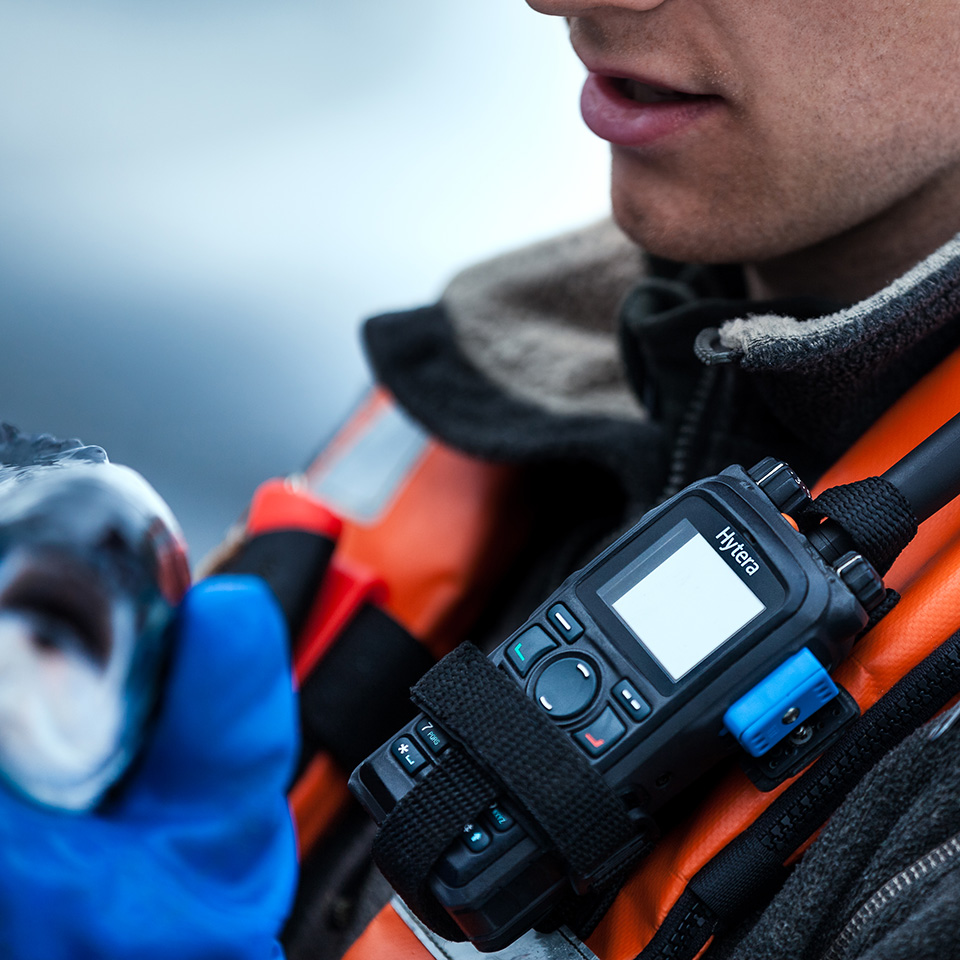
A typical setup consists of a base station/repeater installed either on a barge or at an onshore facility. Each employee is equipped with their own radio. When a user presses the PTT (Push-to-Talk) button and speaks into the radio, the communication is transmitted to the base station, which then relays the conversation to the receiving radio(s).
It is also possible to define multiple communication groups, allowing conversations to be directed to predefined teams instead of being heard by all users. Naturally, the system also supports direct one-to-one communication between individual users.
Digital Sikringsradio systems make it possible to connect multiple base stations together to ensure communication coverage across larger geographical areas. This allows users to move freely within a defined coverage area while maintaining seamless communication between facilities and departments.
The system can be programmed and customised according to each customer’s specific operational requirements and communication needs.
As an alternative to traditional radio infrastructure, we also offer modern Push-to-Talk over Cellular (PoC) solutions. With PoC technology, the radios communicate through the mobile network and connect directly to our servers over 4G or 5G coverage. This eliminates the need for local base stations while still providing reliable communication, group management, GPS positioning, and integrated safety functions. All that is required is a radio equipped with a SIM card and an active subscription.

IP Multisite
P Multisite Connect (IPMS) is an advanced networking solution for Digital Sikringsradio systems.
By connecting multiple base stations within the same IP network, IPMS enables seamless communication across large geographical areas. This allows teams and facilities in different regions or even different countries to communicate as part of a single integrated communication system.
The solution operates over the internet or other IP-based network infrastructure.
Roaming
When several facilities within the same operational area work together, IP Multisite Connect (IPMC), combined with radio roaming functionality, allows users to move seamlessly between coverage areas without changing channels manually.
The radios automatically connect to the most suitable base station available, creating uninterrupted communication across multiple facilities and geographical areas. This ensures reliable communication, simplified operation for users, and improved coordination between teams working across the network.

Dispatch Solutions
With our dispatch solution, you can use your communication radio system directly from a PC or tablet, while also viewing user status and live GPS positions within an integrated map interface. The platform is an ideal solution for communication between feed centres and the various facilities they manage remotely.
Users can communicate using wireless headsets as an alternative to traditional microphones, and the system can be installed on both computers and tablets for flexible operation.
By viewing the GPS positions of employees, operators can quickly contact the person closest to a task, helping to improve workflows and operational efficiency. The system also enhances employee safety by displaying alarms directly within the mapping interface, allowing incidents to be identified immediately.
With the dispatch solution, your colleagues are only a single button press away.
What is PoC Communication ?
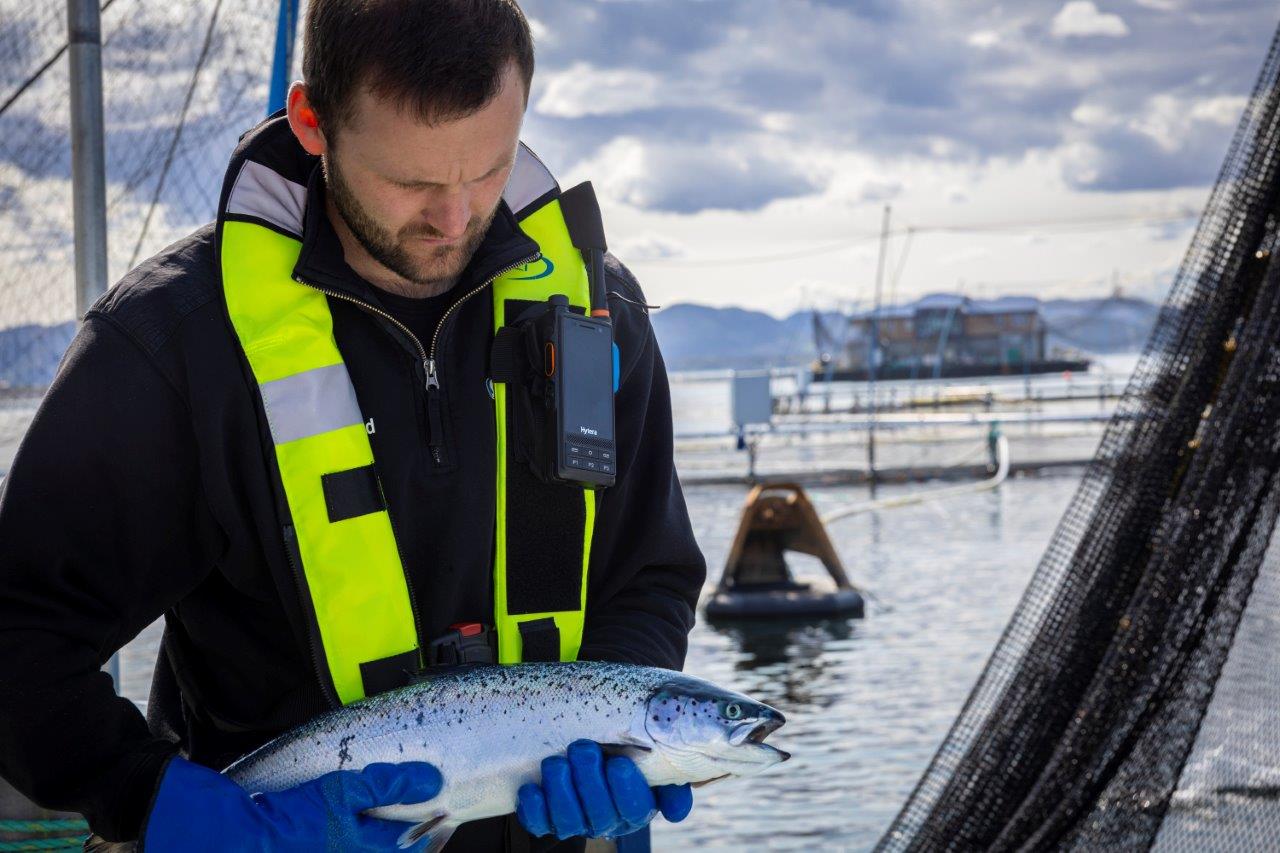
Push-to-Talk over Cellular (PoC) combines the simplicity of traditional radio communication with the flexibility of modern mobile networks. Instead of relying on local repeaters or base stations, the radios communicate securely over 4G and 5G networks.
This enables reliable communication across large geographical areas using only a SIM card and mobile coverage.
No Local Infrastructure Required
Unlike traditional radio systems, PoC solutions do not require local repeaters, antennas, or dedicated radio infrastructure at the facility.
This reduces installation complexity, lowers maintenance requirements, and makes deployment faster and more flexible across both temporary and permanent locations.
Communication Across Unlimited Distances
As long as mobile network coverage is available, users can communicate seamlessly between facilities, regions, vessels, vehicles, and remote operations.
PoC technology makes it possible to maintain communication across cities, countries, or even international operations within the same communication platform.
Advanced Safety Features and Live Positioning
Our PoC solutions support advanced safety functions including emergency alarms, lone worker monitoring, GPS positioning, group communication, and dispatch integration through Smart One Dispatch.
The platform can also be integrated with SIP Gateway solutions for automatic transmission of alarms, voice communication, SMS messages, and GPS coordinates to designated emergency contacts or response centres.
This provides improved operational coordination, faster incident response, and increased employee safety in demanding working environments.
Get in Touch
Stay Updated
Subscribe to Our Newsletter